
Rushed. Pushed. Silenced.
These are the ingredients for burnout, not breakthroughs. In the current economic climate, the instinct to treat engineering teams like assembly lines is understandable; everyone is chasing revenue. But it is ultimately self-defeating. When you trade sanity for speed, you aren't just accruing technical debt; you are dismantling the very team you need to scale.
My name is Ciptoning, currently with RevComm Indonesia. Throughout my career in this industry, I have seen this tension dismantle teams time and time again. The market pressure isn't going away, but our reaction to it must change. Navigating this 'Tech Winter' requires less panic and more precision. Great software isn't born from frantic coding sessions; it is born from clarity. If we want to survive the storm, we have to stop confusing 'busy' with 'productive' and get back to the one thing that actually drives value: thoughtful, deliberate planning.
But how do we know if a plan is actually clear? I’ve worked with brilliant Product Managers who deliver PRDs that are works of art, yet the engineering output still stalls. The problem is rarely a lack of talent; it is a lack of translation. We have a missing link between the 'Product Vision' and the 'Technical Execution.' The requirements are there, but the bridge to turn those words into engineering reality hasn't been built.
It often begins with the 'Silent Handover.' Engineers, unwilling to slow the momentum, accept complex docs without interrogation. Engineering leaders compound the error by confusing delegation with abdication, tossing empty ticket titles downstream without the necessary technical context. The result? A workflow that looks fast is actually paralyzed by constant clarification. Developers are forced to down tools mid-stream to hunt for answers that should have been there day one. By obsessing over a 'fast start,' we are guaranteeing a slow finish.
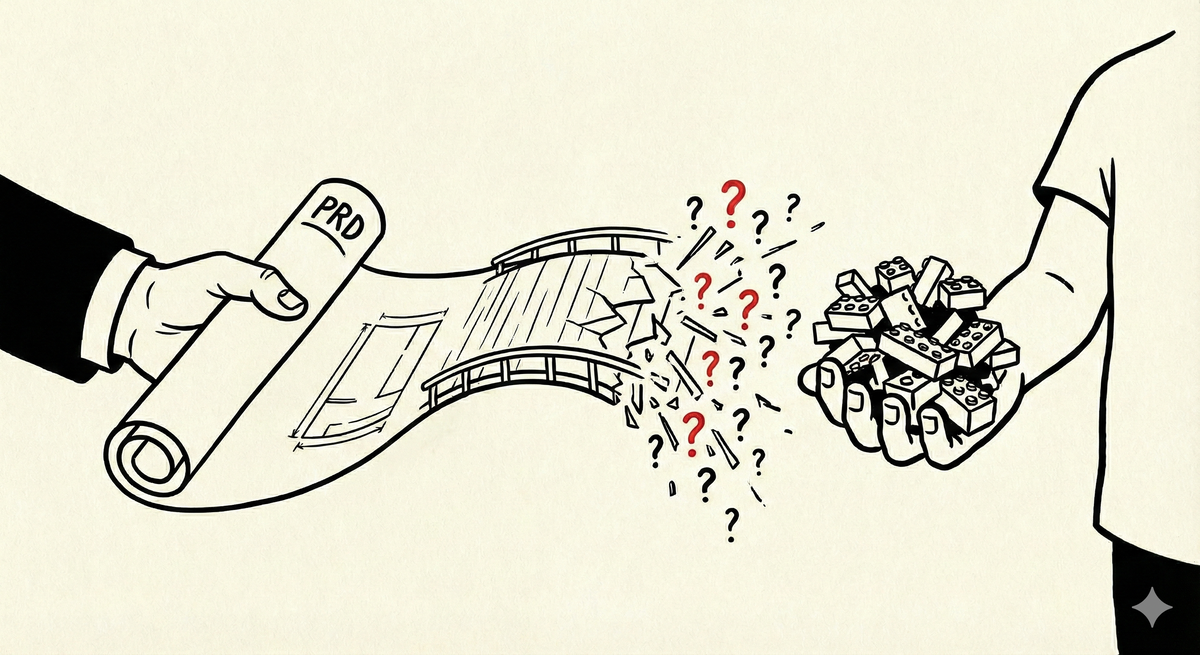
The escape route lies in borrowing a tactic from Amazon’s playbook: 'Working Backwards.' The concept is famous: write the press release before you write the code. But for a team operating under the Agile Scrum framework, the rhythm is different. We live in sprints, not quarters. We needed to adapt the tactic to fit the trenches. We don't need a literal press release; we need a 'Reverse Pitch.'
Here is the rule we implemented: No ticket enters the sprint until the engineer can verbally explain the solution back to the Product Manager. This isn't just a reading assignment; it is a comprehension check. Instead of a silent handover, we force a conversation. The engineer presents the user journey, the edge cases, and the outcome before a single line of code is written. The impact was immediate. The mid-sprint chaos vanished because the confusion was caught upstream. By forcing the team to slow down and articulate the 'What' and the 'Why,' we unlocked the velocity to finally deliver the 'How.'

But clarity is only half the battle. Once you know what you are building, you must decide if it is worth building at all. This brings us to the second pillar of survival: Ruthless Prioritization.
In the chaotic world of B2C, the industry where I cut my professional teeth, user data is noisy and market trends shift overnight. Stakeholders often disguise hunches as requirements. They want everything, and they wanted it yesterday. The common trap is to let the loudest voice in the room dictate the roadmap. My approach is different: I demand an Impact Audit.
We don't prioritize based on emotion; we prioritize based on evidence. Stakeholders must justify their requests not merely with "I think," but with a strategic hypothesis backed by data. If the data is murky, as it often is with new features, we rank by a clear rationale of potential upside versus engineering cost, rather than forcing a fictitious ROI calculation.
And let’s be clear about bugs: if the customer journey is blocked, that isn't a ticket; it is a crisis. That is 'Priority Zero.' It overrides everything else.
This rigorous filtering is necessary because we have forgotten the etymology of the word itself. 'Priority' was originally a singular noun. It means the very first thing. You cannot have five priorities. You have one. The rest is just a wish list.
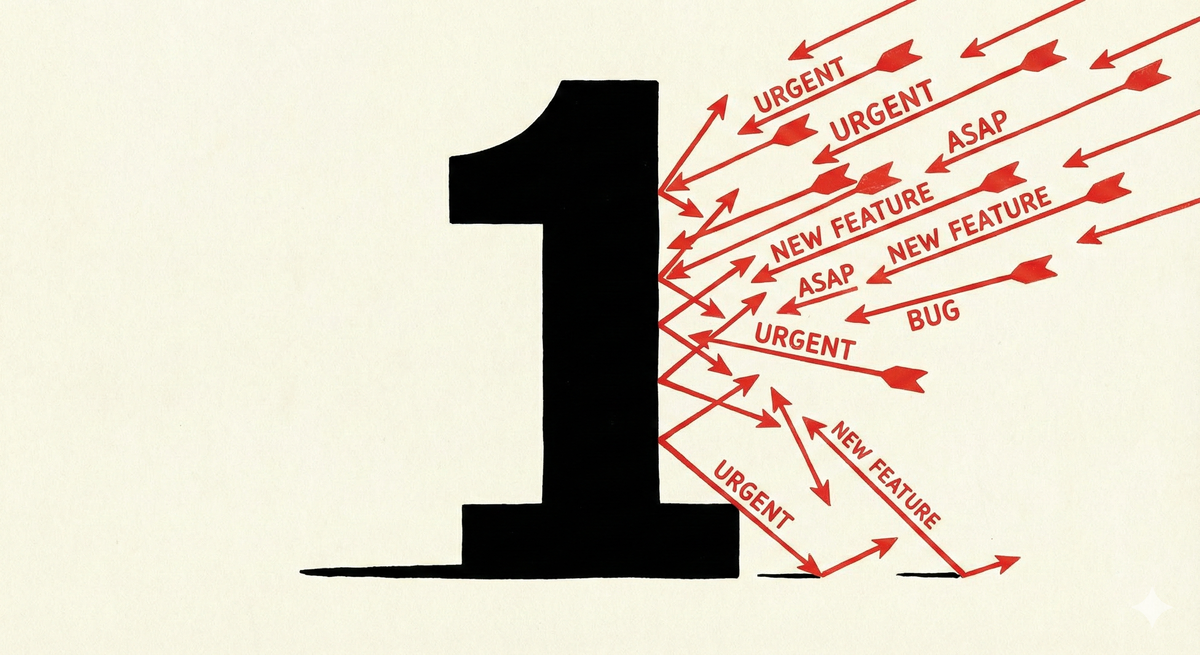
None of this feels intuitive in a tech culture addicted to speed. Creating 'Reverse Pitches' and enforcing 'Singular Priority' feels slow. It feels trivial. But in a 'Tech Winter,' these disciplines are the difference between shipping value and churning noise. We cannot control the market volatility. We cannot stop the waves. But we can choose whether we drown in the chaos or build a process strong enough to ride it.
