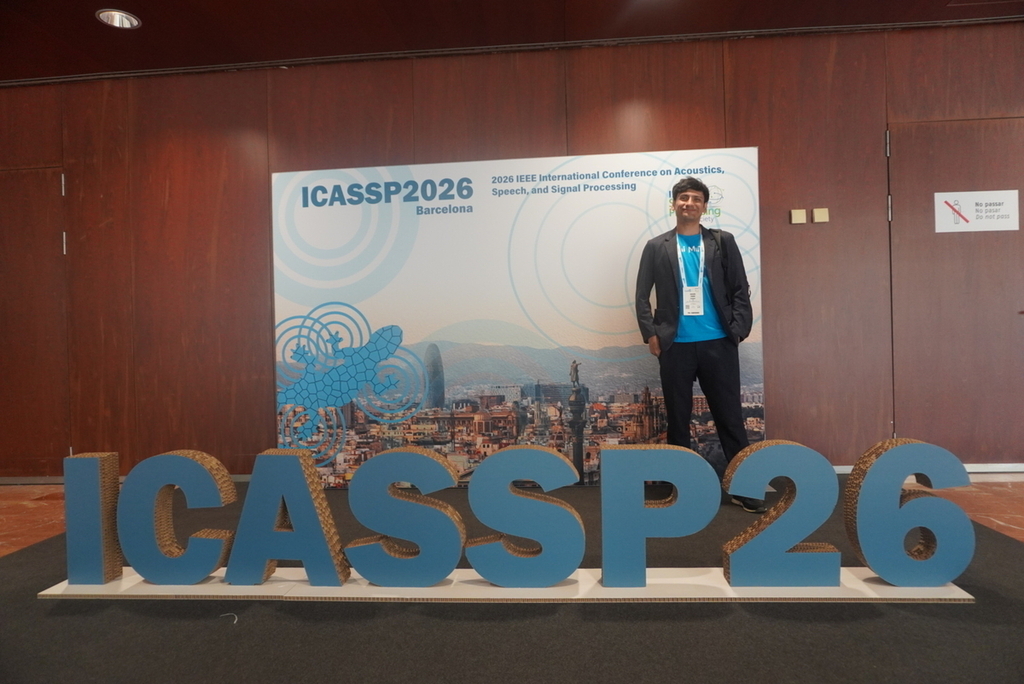
Hi, I'm Jose. I work as a Full Stack Software Engineer at Revcomm and also help with Developer Relations. We organize events, write blog posts, and give talks across Japan and overseas.
Right before the New Year, I spoke with an R&D manager. He said R&D would submit a paper to ICASSP 2026 and asked if I could join if it was accepted. It sounded like a great opportunity to learn and catch up on the latest in Digital Signal Processing and Speech-Language Processing.
Yet, hearing ICASSP made me pause. The name sounded familiar. Back in 2016, when I was working on my thesis, my professor suggested I look for conferences to submit to. ICASSP in Shanghai was one option, but since my thesis was about automatic ontological generation, it didn't seem like the right fit for a signal processing conference. I submitted it somewhere else, but I don't remember much after that.
Fast forward—the paper was accepted, and by May 1st, I was on a flight to Barcelona.
Preparations
At Revcomm, I get to work with AI in lots of ways. We use Claude Code for vibe coding, rely on GitHub Copilot for code reviews, and experiment with new ways to improve our development pipelines. For example, we recently implemented a pipeline to analyze audit logs using BigQuery MCP, so customer support members can request specific logs via prompting. This change reduced the time to retrieve audit logs from hours to just a few minutes and has already helped the support team resolve customer issues more quickly, along with reducing the burden on the tech side.
We also hold internal tech meetings where teams share what they know. I've heard R&D talks about Speaker Diarization, generative error correction, and fake detection. The topics themselves weren't new to me, but I wondered how much value I could really get from the conference. So, what did I do? I decided to focus on what I wanted to learn. With AI tools today, it's easier than ever to find the information you need quickly.
First, I used Google Deep Research to look up the latest trends in Speaker Diarization and other relevant topics at the company. Starting in April, I read one or two interesting papers each day until the conference proceedings were released.
The ICASSP proceedings came out on May 4, and they were huge, more than 2GB and over 4,000 papers. To avoid missing any relevant sessions, I set up a workflow using Claude Cowork:
- I uploaded the proceedings index and my own reading list from the past month.
- Then, I asked Claude to filter out the presentations for a three-hour period from the tasks I was most interested in. As context, I also included information from the papers I’d read.
- I iterated over step 2 with different parameter values. For instance, I wanted to connect with Japanese researchers, so I searched for presentations by Japanese universities. I also searched for researchers whom I have interacted with before. With this approach, to my surprise, I discovered that my former Computer Science professor was a co-author on one of the papers.
- With the information provided, I manually created a schedule for each day and checked with my colleagues to avoid unnecessary overlap and cover more ground.
Barcelona
ICASSP 2026 ran from May 4 to May 8, in the middle of Japan’s Golden Week. The first day was all about tutorials. We used that day to acclimatize and print the poster.
Our first real day was May 5. Barcelona is truly one of Europe’s major tech hubs—friendly, warm, safe, and full of energy. Our Airbnb was about 15 minutes on foot or 13 minutes by bus, which is pretty typical for Barcelona. The conference venue was impressive and felt more like a Hilton hotel.
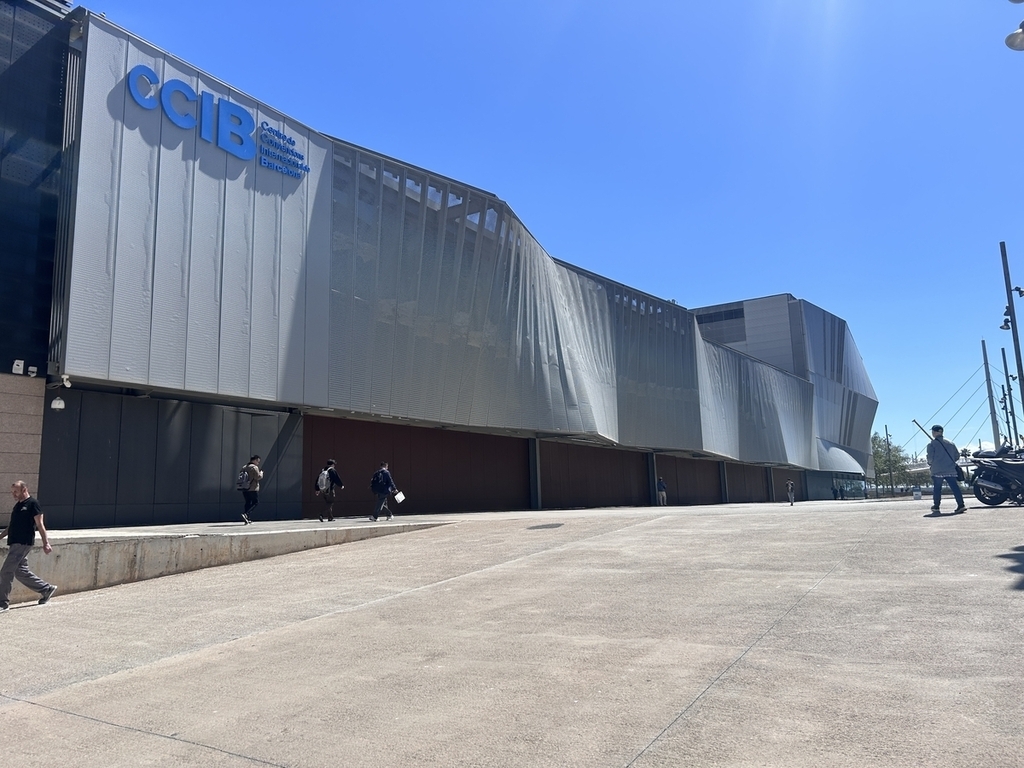
We registered, picked up badges, and received a Barcelona Hello Card for free metro transport. The conference offered two main experiences: walking the poster area or attending track presentations. Each day, I spent an hour on posters and used the remaining time on presentations. The schedule was packed, lunch ran an hour to an hour and a half, and coffee breaks were around 3:30 pm, with work zones also available for those who needed them (a lot actually).
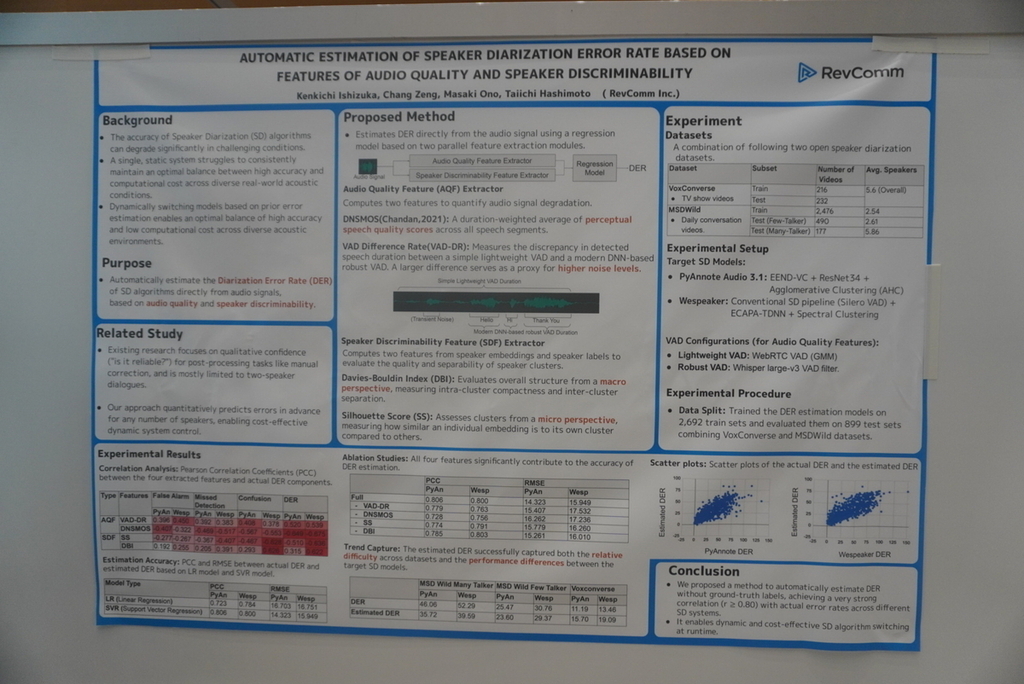
The next day, on May 6, we had our poster presentation first thing at 9:00 a.m. It went really well. We got questions from university students and professors from all over the world. It helped that the poster’s position was easier to see.
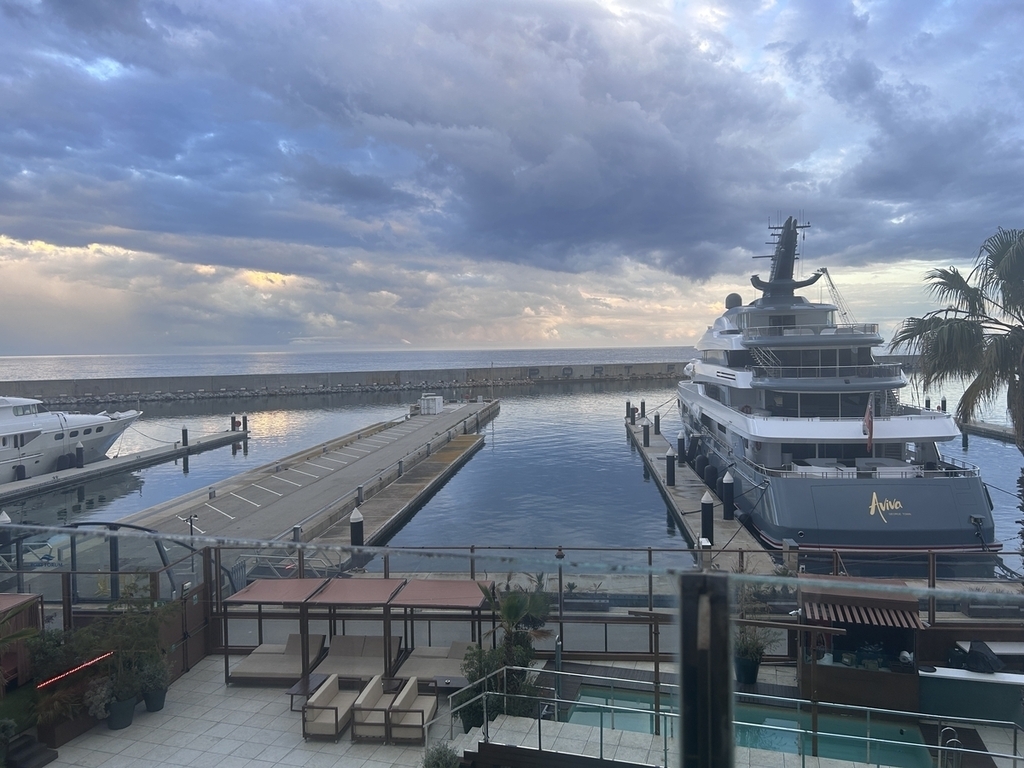
That evening, I attended the Young Professionals Networking Event at La Mar, a seaside restaurant with a fantastic view of yachts docked on the port. Although the website said it was a ten-minute walk from the main venue, I got lost along the way. Fortunately, I wasn’t alone, and several of us ended up arriving together, starting conversations before we even entered.
The remaining days settled into a routine of an early breakfast at 7:00 and a walk to the conference by 9:00 a.m.
Poster and talk recommendations
Here were a few standout posters and talks. Planning ahead helped maximize relevant takeaways, but some spontaneous choices were also impactful.
- What Statistics and AI Offer Each Other? by Emmanuele Candès
- By integrating statistical insights into AI processes—specifically for data collection, quality control, and uncertainty quantification—we can build more reliable and efficient AI systems that adhere to the high standards of scientific research.
- Fully unsupervised score ensembling (FUSE) only slightly outperforms supervised learning.
- Throw more compute, throw more data, and things will go well.
- A related lecture on this is live on YouTube: https://www.youtube.com/watch?v=Nj9hcoHhglw
- KAME: A tandem architecture for enhancing knowledge in real-time speech-to-speech conversational AI.
- The engineers at Sanaka AI were very generous in explaining their work. They also wrote a blog that summarizes it: https://pub.sakana.ai/kame/
- Entangling classical- and quantum-domain information/signal processing by Lajos Hanzo
- I attended this plenary talk because I was curious about quantum computing and expected to be overwhelmed by technical jargon. I was pleasantly surprised. Professor Hanzo was very expressive and connected well with the audience. As people were leaving for lunch, he asked, “I know you are hungry, but just before you go, how many of you were interested in Quantum after this talk?” I raised my hand, and I wasn't the only one.
- Signal Quality Assessment in the Era of Foundation Models
- Video quality, playback smoothness, and network performance are the main challenges in signal quality assessment. This topic really resonated with me as an engineer.
- https://ieeexplore.ieee.org/document/11460679
- Scaling an Audio-Visual Quality Assessment Dataset via Crowdsourcing
- People often focus on the weakest aspect of a system but judge it based on its strongest feature.
- https://ieeexplore.ieee.org/document/11463693
And many more. See this year’s proceedings here: https://ieeexplore.ieee.org/xpl/conhome/11460365/proceeding
Lessons (TLDR;)
When I joined a local conference in 2016, Machine learning and Data Science were driving AI. In NLP, I saw papers on vectorization, autoencoders, LDA, and more. A decade later, LLMs, agents, and quantum computing are popular. Still, the vibe is the same. People are excited, talking passionately. Methods have evolved, but the people remain. I won’t wait another decade to go again (ICL? Maybe next year in Toronto).
Here’s what I learned:
- Go to networking events—they are the best way to meet people and learn from peers. My strategy was to look for paper authors or poster presenters, as it was easier to start a conversation around them. Overall, everyone was friendly, so that made things easier. If you are unsure how to start a conversation, asking someone what brought them to the event is a good opener.
- If you're an engineer, tutorials are great. You'll feel most at home.
- Pick your track ahead and know what to see. It can get overwhelming, so use AI tools to prioritize. Big conferences also have industry tracks.
- Don't hesitate to ask questions. The people presenting posters are always happy to answer.
- It's the people who make these trips worthwhile. You meet researchers, engineers, and entrepreneurs, make connections, start collaborations, and maybe make friends.
- Write notes on each session you attend. Even a brief summary is enough. If possible, categorize them by tags. Without this, I wouldn’t have written this article.
Thanks to Revcomm for the opportunity. You can read our R&D paper at the link below. It proposes a novel method to estimate the speaker diarization error rate.
https://ieeexplore.ieee.org/document/11463892
Thank you for reading. You can find me on LinkedIn.